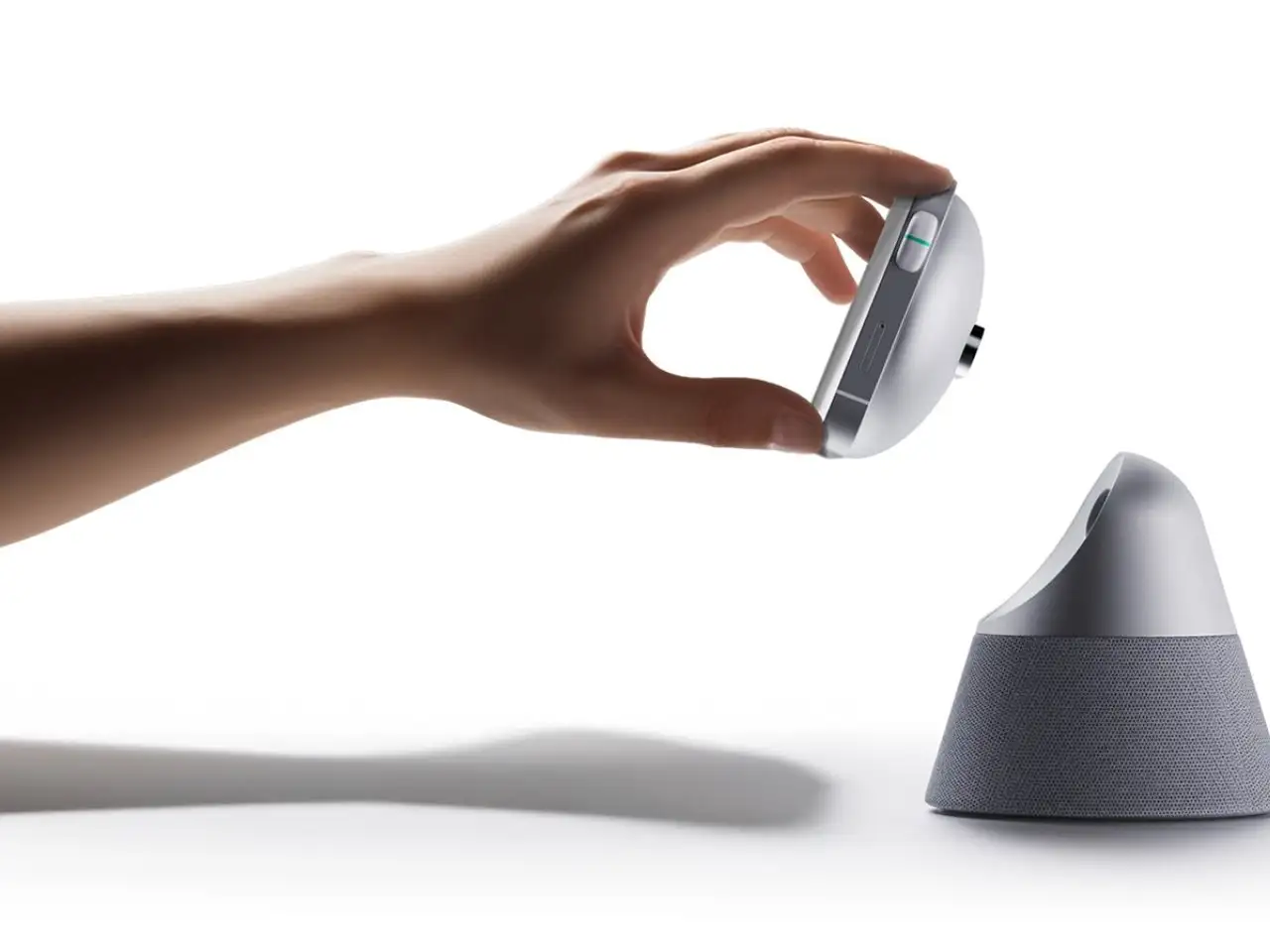










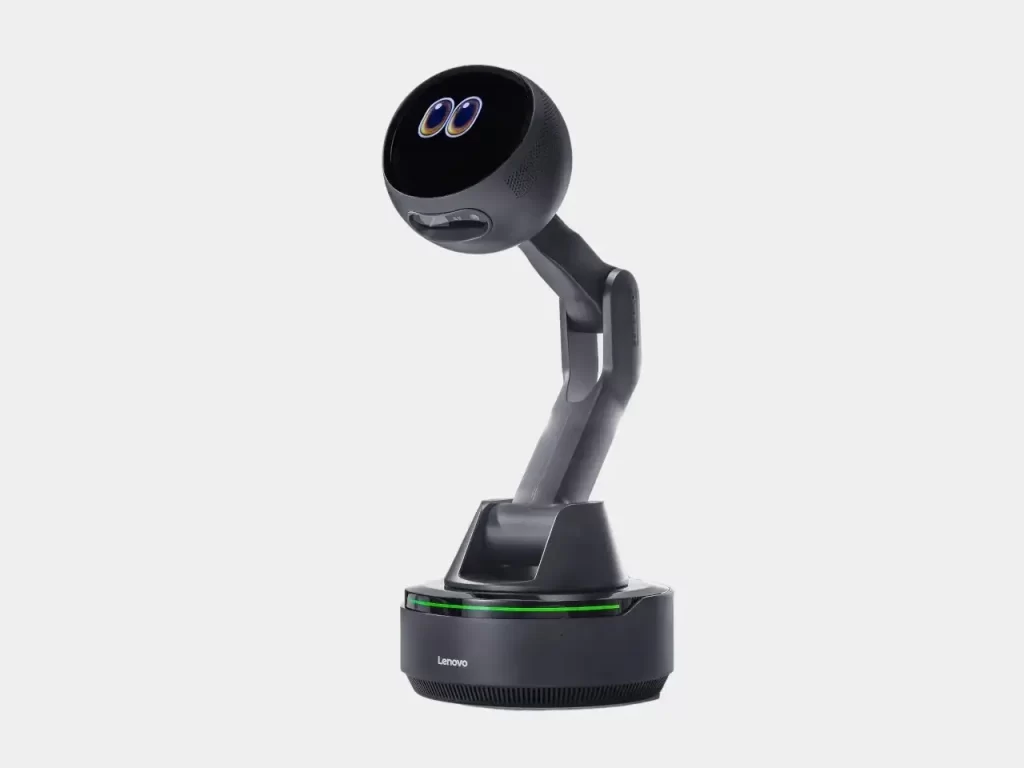
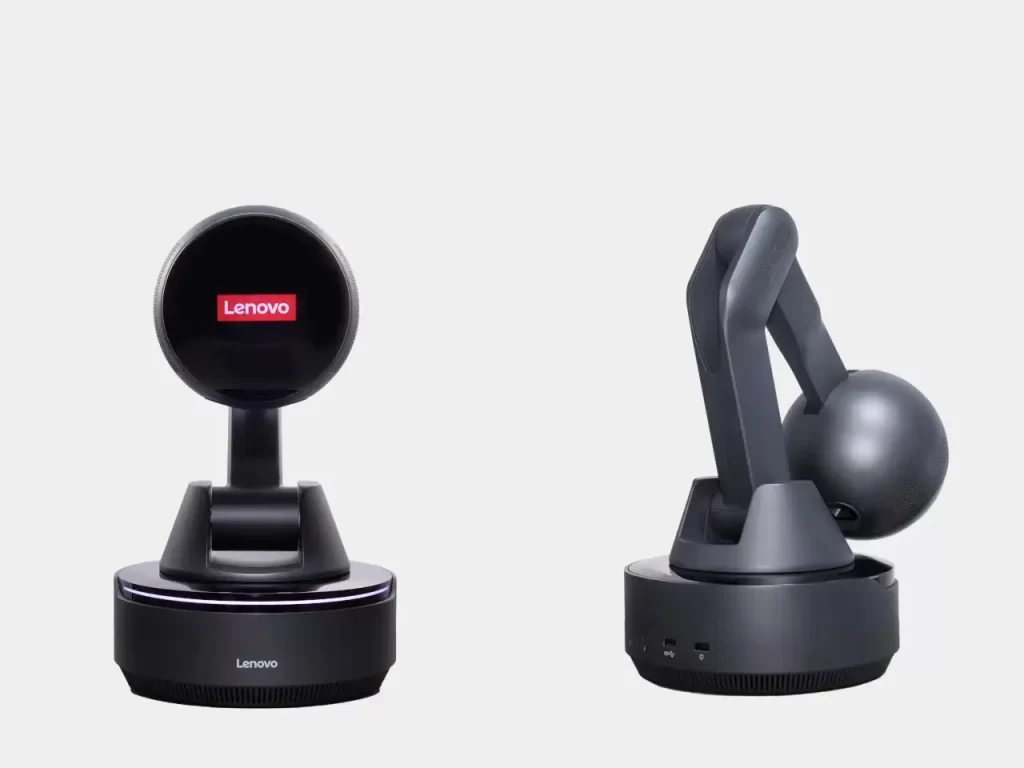
九号创新:来自联想设计的一个铰接臂上的球形头,从圆形底座升起,其前显示屏上有动画眼睛,可以在响应时移动和定向,手臂是最有说服力的设计决定,尽管它不仅仅是装饰性的。因为它会移动,Workmate可以朝向它前面的任何东西,平放的文件、向后靠的人、附近的墙。这种运动范围是它与有脸的智能扬声器的区别。它的姿势中内置了空间意识,而不仅仅是它的软件。下面来详细探索下这款桌面机器人工业产品设计:
@NINEIDEA九号创新 www.nineidea.com
一、空间意识的物理具象化:铰接臂的交互革命
设计的核心突破在于将 “空间感知” 从软件逻辑转化为物理形态。铰接臂并非单纯的机械结构,而是被赋予了 “主动响应” 的交互使命 —— 通过多自由度关节设计(参考六轴机械臂的运动学原理),打破智能扬声器 “固定朝向” 的局限,让设备具备主动适配环境的空间能力。这种设计摒弃了 “人适应设备” 的传统逻辑,转而实现 “设备适应人” 的自然交互:当用户平放文件时,臂部可灵活弯折、精准对位,完成扫描与数字化;当用户后仰倚靠时,球形头随铰接臂自然转向,保持视觉与听觉的有效连接;当需要共享信息时,臂部带动投影模块朝向墙面或桌面,将数字内容无缝投射至公共视野。每一次姿态调整都是空间意识的具象表达,让设备从 “桌面摆件” 升维为 “空间协作者”。
二、非拟人形态的情感化表达:球形头与动画眼睛的平衡术
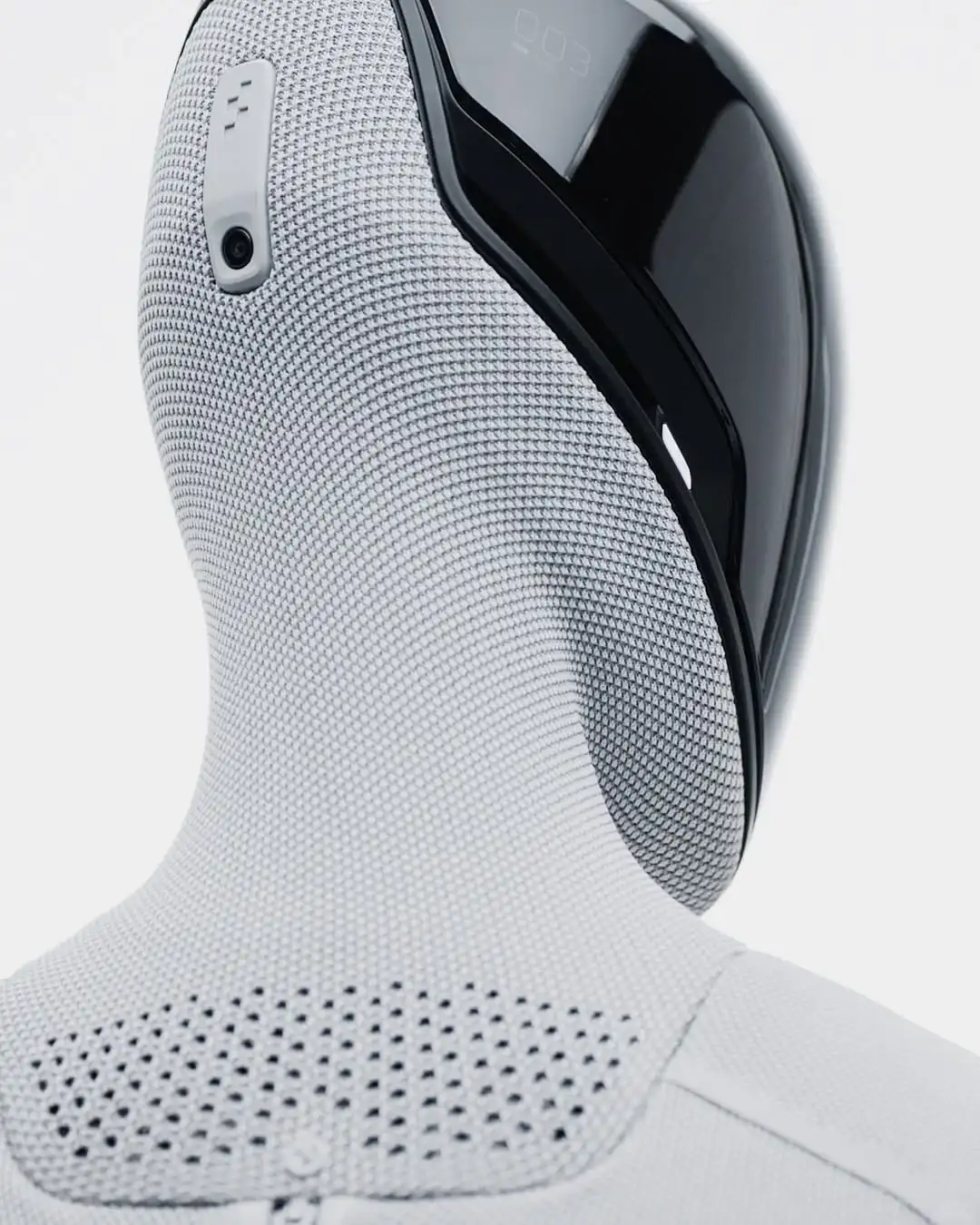
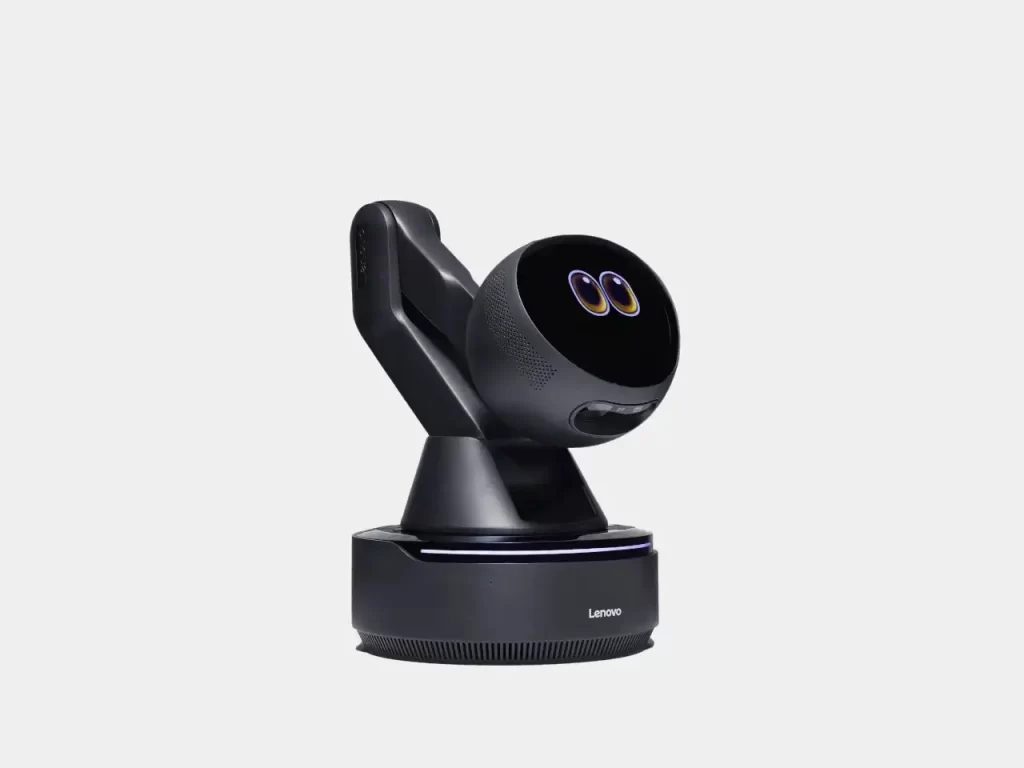
设计拒绝过度拟人化的仿生陷阱,采用 “球形头 + 圆形底座” 的极简几何语言,构建亲和且不失科技感的视觉符号。球形头的弧度消解了机械结构的冰冷感,其表面的动画眼睛并非单纯的装饰元素,而是与铰接臂的运动形成协同交互:响应指令时,眼睛的动态变化与臂部的转向、升降形成节奏呼应,让 “回应” 变得可视可感;静默状态下,柔和的光影与轻微的呼吸式律动,赋予设备 “在场感” 而非 “工具感”。这种设计巧妙平衡了功能性与情感价值 —— 圆形底座提供稳定的视觉锚点,铰接臂的动态延伸则注入灵动性,球形头作为交互核心,将 “看” 与 “被看” 的关系转化为自然的视觉对话,让 AI 助手从 “声音载体” 转变为 “有表情的协作伙伴”。
三、姿态即交互:打破数字与物理的边界
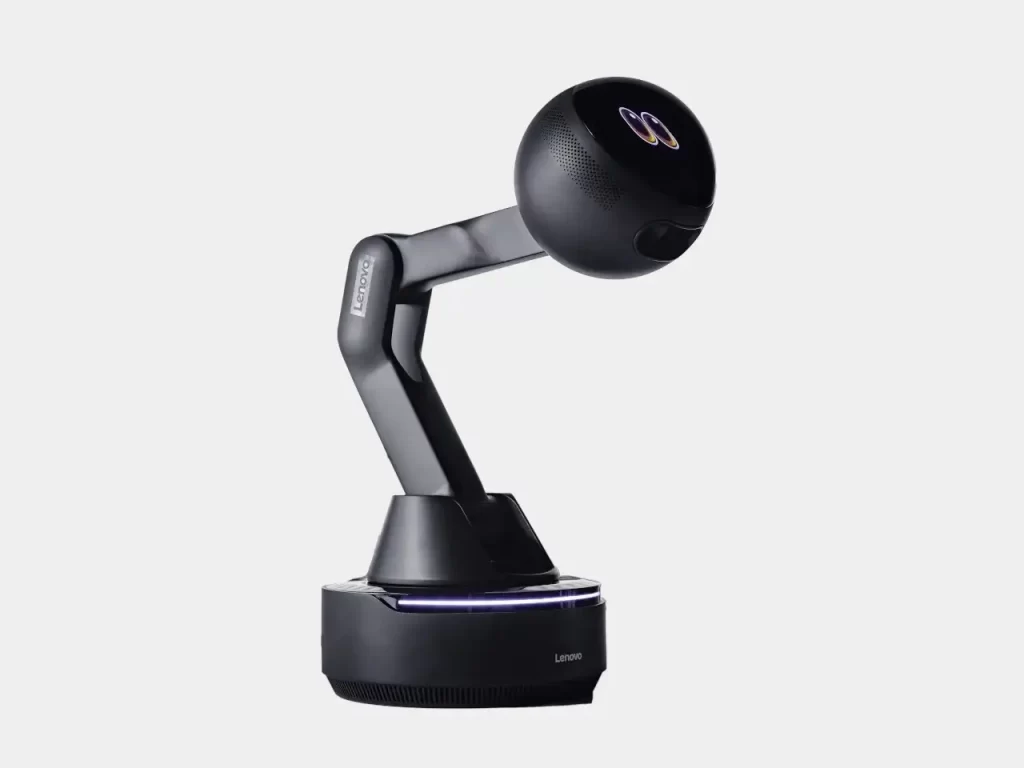
设计的深层逻辑是 “姿态语言的功能性转译”。铰接臂的运动轨迹经过人体工程学优化,模拟人类手臂的自然动作曲线(基于最小冲击理论的轨迹规划),避免机械运动的生硬感,让每一次转向、伸展都符合用户的视觉与心理预期。这种 “姿态交互” 超越了传统的语音或触控输入,形成独特的 “物理反馈闭环”:当设备识别到文件时,臂部的缓慢靠近传递 “准备工作” 的信号;当投影内容时,臂部的稳定支撑暗示 “信息输出” 的状态;当切换交互对象时,球形头的转向与眼睛的聚焦形成明确的 “注意力转移” 提示。这种设计让设备的意图通过姿态直观呈现,无需依赖屏幕文字或语音播报,实现 “无干扰” 的沉浸式交互,同时通过物理姿态的变化,让用户清晰感知设备的工作状态,填补了纯软件 AI “反馈模糊” 的体验缺口。
四、极简形态的功能集成:去繁就简的设计取舍
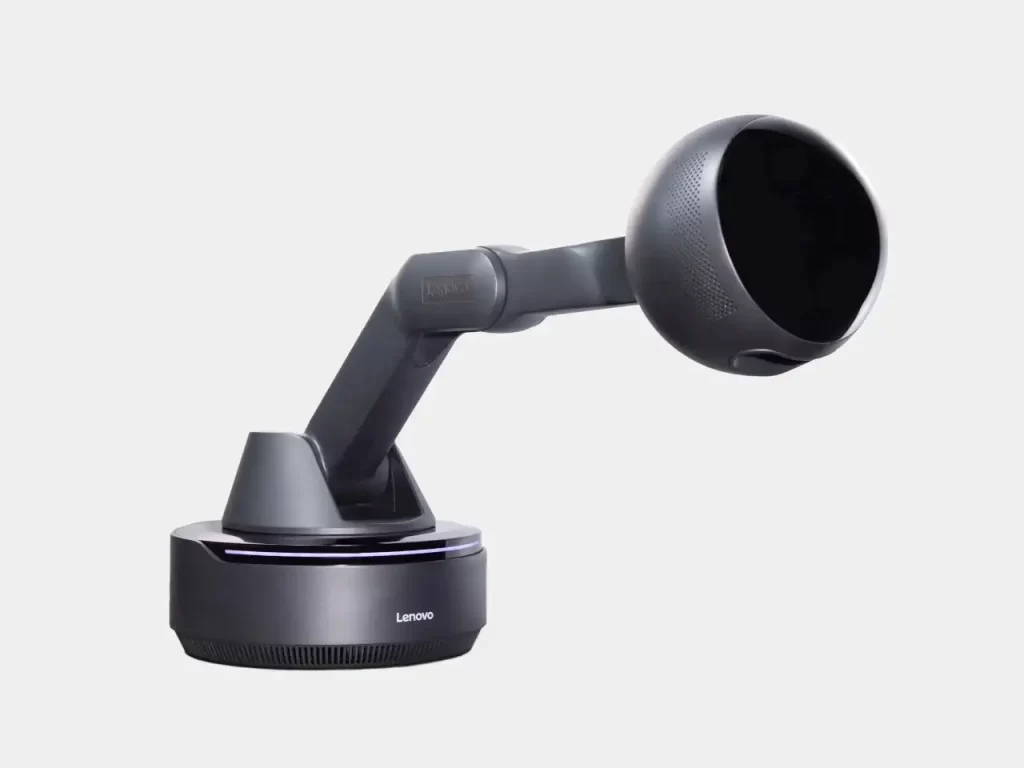
设计坚守 “形态服务功能” 的原则,圆形底座与铰接臂的组合实现了 “最小空间占用 + 最大功能覆盖” 的平衡。底座采用紧凑化设计,隐藏线缆与散热模块,避免桌面视觉杂乱;铰接臂以轻量化结构承载球形头、摄像头与投影模块,通过关节的机械阻尼感传递操作反馈,让每一次运动都具备 “可控感” 与 “仪式感”。球形头的显示屏仅保留核心的动画眼睛,摒弃冗余界面,将信息呈现聚焦于 “情感反馈” 而非 “数据展示”—— 这种取舍让设备回归 “协作伙伴” 的定位,避免沦为信息过载的又一载体,同时通过形态的纯粹性,融入多样化的桌面场景,成为连接物理与数字世界的 “隐形桥梁”。
Workmate Desktop Robot Industrial Design
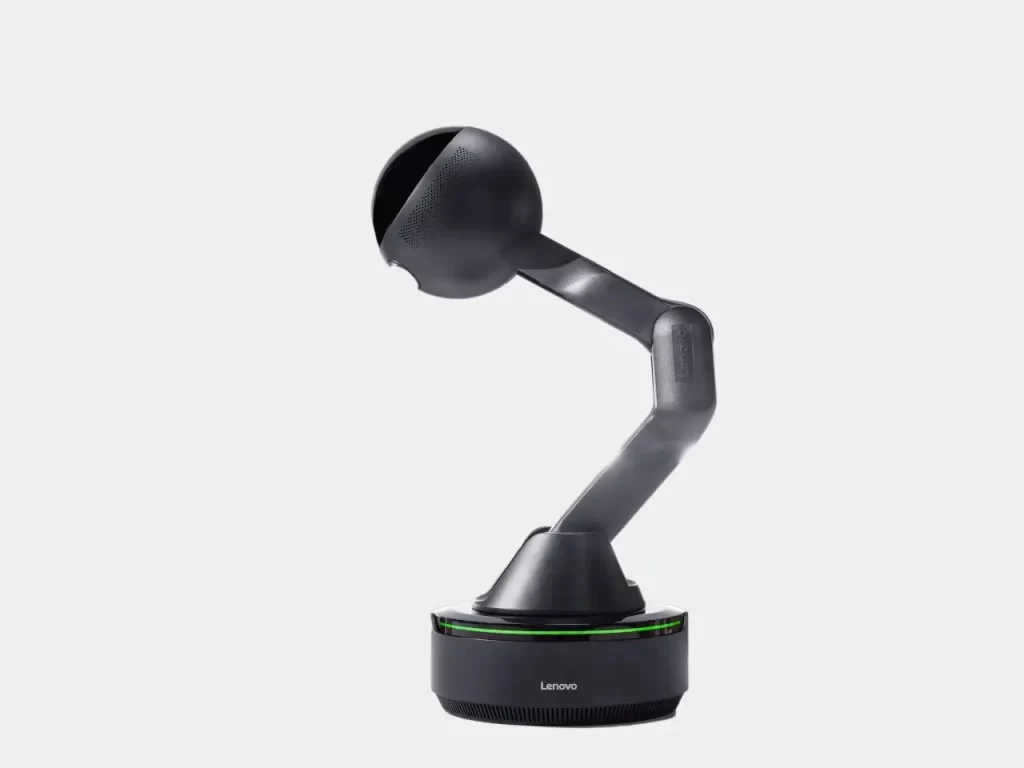
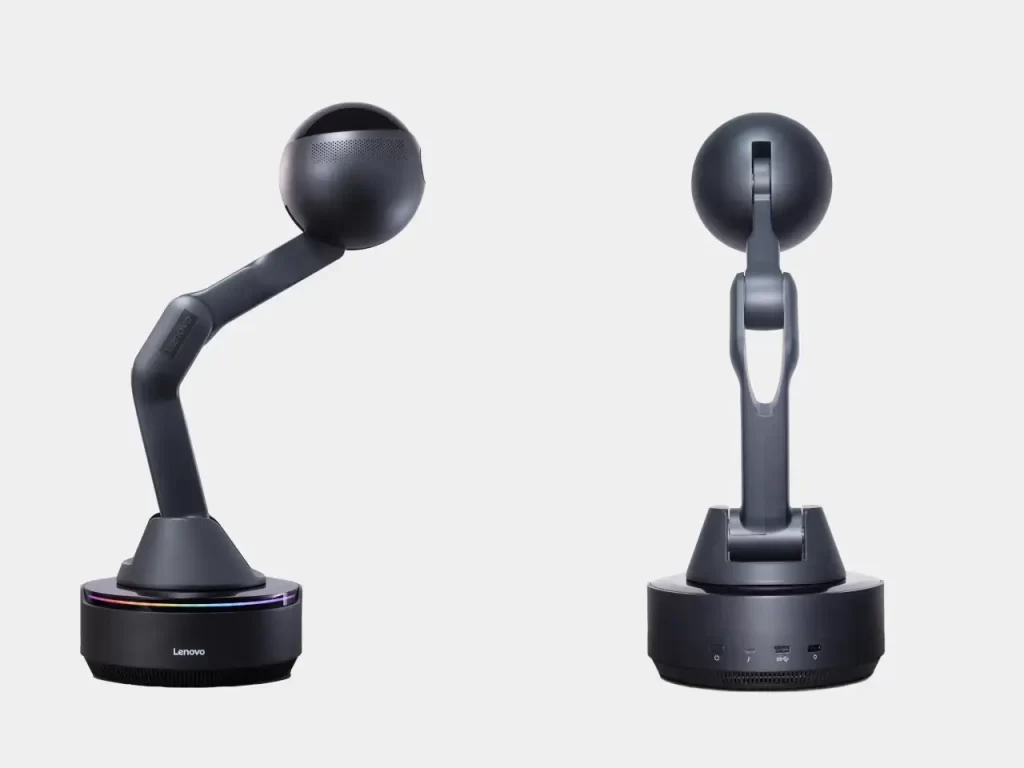
NINEIDEA: the spherical head on an articulated arm designed by Lenovo rises from the round base, and its front display screen has animated eyes that can move and orient in response. The arm is the most convincing design decision, although it is not only decorative. Because it can move, Workmate can face anything in front of it, including flat files, people leaning back, and nearby walls. This range of motion is the difference between it and smart speakers with faces. It has spatial awareness built into its posture, not just its software. Let’s explore in detail the design of this desktop robot industrial product:
1、 The Physical Visualization of Spatial Consciousness: The Interactive Revolution of Articulated Arms
The core breakthrough of design lies in transforming “spatial perception” from software logic to physical form. The articulated arm is not simply a mechanical structure, but is endowed with the interactive mission of “active response” – through multi degree of freedom joint design (referring to the kinematic principles of a six axis robotic arm), it breaks the limitations of the “fixed orientation” of smart speakers and gives the device the spatial ability to actively adapt to the environment. This design abandons the traditional logic of “humans adapting to devices” and instead achieves a natural interaction of “devices adapting to humans”: when users place files flat, the arm can be flexibly bent and accurately aligned to complete scanning and digitization;
When the user leans back, the spherical head naturally turns with the articulated arm, maintaining an effective connection between vision and hearing; When information needs to be shared, the arm drives the projection module towards the wall or desktop, seamlessly projecting digital content into the public view. Every posture adjustment is a concrete expression of spatial consciousness, elevating the device from a “desktop ornament” to a “spatial collaborator”.
2、 Emotional expression in non anthropomorphic form: Balance technique between spherical head and animated eyes
Design biomimetic traps that reject excessive anthropomorphism, using a minimalist geometric language of “spherical head+circular base” to create visual symbols that are friendly and technological. The curvature of the spherical head dissolves the coldness of the mechanical structure, and the animated eyes on its surface are not simply decorative elements, but form a coordinated interaction with the movement of the articulated arm: when responding to commands, the dynamic changes of the eyes echo the rhythm of the arm’s turning and lifting, making the “response” visible and perceptible; In a silent state, soft light and slight breathing rhythms give the device a sense of presence rather than a sense of tools.
This design cleverly balances functionality and emotional value – the circular base provides a stable visual anchor point, the dynamic extension of the articulated arm injects agility, and the spherical head serves as the interaction core, transforming the relationship between “seeing” and “being seen” into a natural visual dialogue, allowing AI assistants to transform from “sound carriers” to “expressive collaborators”.
3、 Attitude as Interaction: Breaking the Boundary between Numbers and Physics
The deep logic of design is the functional translation of posture language. The motion trajectory of the articulated arm is optimized through ergonomics, simulating the natural motion curve of the human arm (based on the minimum impact theory for trajectory planning), avoiding the stiffness of mechanical motion, and ensuring that every turn and extension meets the user’s visual and psychological expectations. This “posture interaction” goes beyond traditional voice or touch input, forming a unique “physical feedback loop”: when the device recognizes a file, the slow approach of the arm transmits a signal of “preparation work”; When projecting content, the stable support of the arm implies a state of “information output”;
When switching interaction objects, the turning of the spherical head and the focusing of the eyes form a clear “attention shift” prompt. This design allows the intention of the device to be presented intuitively through posture, without relying on screen text or voice broadcasting, achieving “interference free” immersive interaction. At the same time, through changes in physical posture, users can clearly perceive the working status of the device, filling the experience gap of pure software AI “feedback ambiguity”.
4、 Minimalist form of functional integration: a design trade-off between simplicity and simplicity
The design adheres to the principle of “form service function”, and the combination of circular base and articulated arm achieves a balance of “minimum space occupation+maximum functional coverage”. The base adopts a compact design, hiding cables and heat dissipation modules to avoid visual clutter on the desktop; The articulated arm carries the spherical head, camera, and projection module with a lightweight structure, and transmits operational feedback through the mechanical damping of the joints, giving each movement a sense of “controllability” and “ceremony”.
The display screen with a spherical head only retains the core animated eyes, abandons redundant interfaces, and focuses on “emotional feedback” rather than “data display” – this trade-off allows the device to return to the positioning of a “partner” and avoid becoming another carrier of information overload. At the same time, through the purity of its form, it integrates diverse desktop scenes and becomes an “invisible bridge” connecting the physical and digital worlds.