









九号创新:工业设计方法论是将创意转化为切实解决方案的系统化路径,它不仅关乎产品的外观,更是对功能、用户体验、生产制造及社会影响的综合考量。以下是一套层次化的工业设计方法论框架,融合了经典原则与当代思维,帮助你系统性地理解这一过程。
@NINEIDEA九号创新 www.nineidea.com
一、核心理念:以人为中心的系统思维
工业设计的起点永远是 “人” 与 “问题”。
- 以人为本(Human-Centered):设计应服务于用户的实际需求、认知习惯与情感体验,而非仅仅追求形式创新。
- 系统思维(System Thinking):产品是“人-产品-环境-社会”系统中的一环,需考量全生命周期的影响(如制造、使用、回收)。
二、关键方法论与工具
1. 研究洞察阶段:定义真实问题
- 用户研究:
- 田野调查(观察真实使用场景)
- 深度访谈、用户旅程地图(梳理痛点与情感触点)
- 人因工程分析(生理与心理维度)
- 市场与技术扫描:
- 竞品分析、技术趋势研究
- 材料与工艺可行性预研
2. 概念生成阶段:发散与收敛
- 创意发散:
- 头脑风暴、思维导图、SCAMPER策略(替代、合并、改造等)
- 故事板(可视化使用场景)
- 概念筛选:
- 加权决策矩阵(从用户需求、技术、成本等维度评估)
- 粗略原型(快速验证核心假设)
3. 深化设计阶段:整合与细化
- 体验设计:
- 交互逻辑与界面设计(针对智能硬件)
- 感官设计(材质、声音、触感等综合感知)
- 工程协同:
- DFM/A(面向制造/装配的设计)确保可量产
- 可持续设计(模块化、易拆解、环保材料选择)
4. 验证迭代阶段:测试与优化
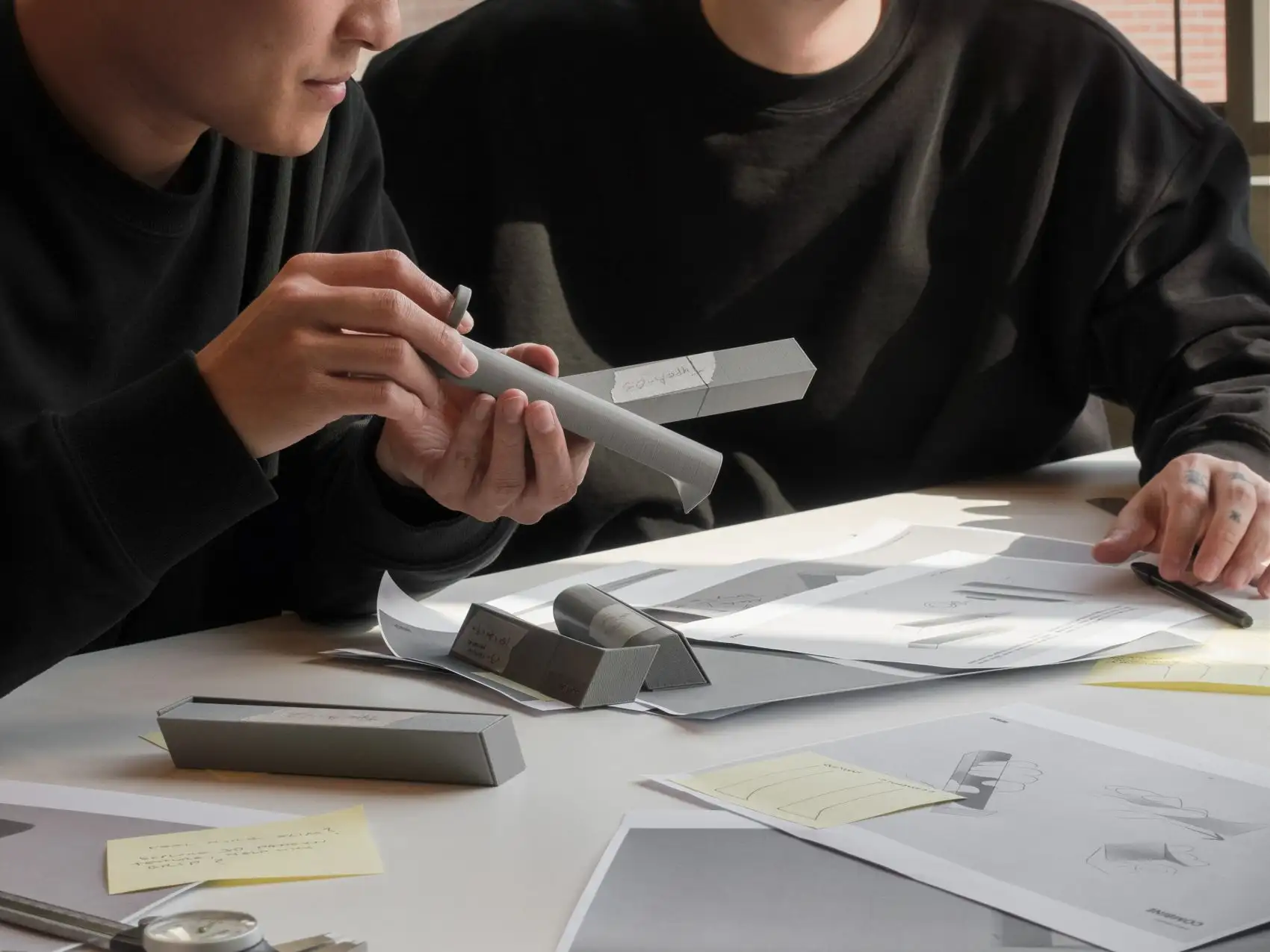
- 原型测试:
- 功能原型(验证技术可行性)
- 外观模型(CMF与造型感知测试)
- 用户可用性测试(迭代细节)
- 数据驱动优化:
- A/B测试(多方案对比)
- 虚拟仿真(结构、热力学等性能验证)
三、经典设计思维框架
- 双钻模型(Double Diamond):
发现(发散)→ 定义(收敛)→ 开发(发散)→ 交付(收敛)
强调“先拓宽问题,再聚焦方案”的节奏。 - 设计冲刺(Design Sprint):
5天内完成从问题定义到原型测试的快速循环,适合敏捷创新。 - 包容性设计(Inclusive Design):
考虑边缘用户的需求(如老年人、残障群体),提升产品普适性。
四、当代趋势下的方法论演进
- 数字融合:
- 参数化设计(通过算法生成形态)
- 数字孪生(虚拟模拟产品全生命周期)
- 可持续导向:
- 循环设计(Cradle to Cradle)
- 低环境影响材料选择与碳足迹测算
- 系统化服务设计:
- 从单一产品扩展到“产品+服务”生态系统(如共享硬件、订阅制服务)
五、设计原则的底层逻辑
无论方法如何演变,以下原则始终贯穿优秀设计:
- 形式追随功能(但不止于功能):美感与情感价值同样重要。
- 少而精(Less, but better):Dieter Rams的“设计十诫”仍是简洁设计的标杆。
- 诚实的设计:不夸大功能,材料与结构真实可感知。
六、案例启示:方法论的实际应用
- 戴森吸尘器:
通过5000+原型迭代,将“气旋分离”技术转化为颠覆性用户体验。 - 苹果MacBook Unibody:
一体成型铝壳兼顾美学、结构与生产效率,体现DFM与体验的平衡。 - OXO好握厨具:
基于通用设计原则,将“易用性”扩展至全年龄段用户。
结语:方法论的本质
工业设计方法论不是僵化的流程清单,而是 “在约束中创造性解决问题”的思维工具箱。优秀设计师需灵活组合工具,在用户需求、商业目标与技术可行性之间找到优雅的平衡点。最终,一切方法都应回归设计的本质:为人与世界创造更有意义的连接。
设计永远在迭代,方法论亦然。保持好奇、拥抱交叉学科知识(如心理学、工程学、社会学),方能在复杂世界中做出真正持久的设计。





Creating Freedom in Constraints: The Deep Logic of Industrial Design Methodology
NINEIDEA: industrial design methodology is a systematic path to transform creativity into practical solutions. It is not only about the appearance of products, but also the comprehensive consideration of functions, user experience, production and social impact. The following is a hierarchical framework of industrial design methodology that combines classic principles with contemporary thinking to help you systematically understand this process.
1、 Core concept: System thinking centered on people
The starting point of industrial design is always “people” and “problems”.
Human Centered: Design should serve the actual needs, cognitive habits, and emotional experiences of users, rather than just pursuing formal innovation.
System Thinking: Products are a part of the “human product environment society” system, and their impact throughout the entire lifecycle (such as manufacturing, use, and recycling) needs to be considered.
2、 Key Methodology and Tools
- Research insight stage: defining real problems
User research:
Field investigation (observing real usage scenarios)
In depth interviews, user journey maps (sorting out pain points and emotional touchpoints)
Human factors engineering analysis (physiological and psychological dimensions)
Market and Technology Scanning:
Competitive analysis and technology trend research
Feasibility Study of Materials and Processes
- Concept generation stage: divergence and convergence
Creative divergence:
Brainstorming, mind mapping, SCAMPER strategies (substitution, merging, transformation, etc.)
Storyboard (Visual Use Case)
Concept screening:
Weighted decision matrix (evaluated from dimensions such as user needs, technology, cost, etc.)
Rough prototype (rapid validation of core assumptions)
- Deepening design phase: integration and refinement
Experience Design:
Interaction logic and interface design (for smart hardware)
Sensory design (comprehensive perception of materials, sound, touch, etc.)
Engineering collaboration:
DFM/A (Design for Manufacturing/Assembly) ensures mass production capability
Sustainable design (modular, easy to disassemble, environmentally friendly material selection)
- Validation iteration phase: testing and optimization
Prototype testing:
Functional prototype (verifying technical feasibility)
Appearance model (CMF and shape perception testing)
User usability testing (iteration details)
Data driven optimization:
A/B testing (comparing multiple options)
Virtual simulation (structural, thermodynamic, and other performance verification)
3、 Classic Design Thinking Framework
Double Diamond model:
Discovery (divergence) → Definition (convergence) → Development (divergence) → Delivery (convergence)
Emphasize the rhythm of “expanding problems first, then focusing on solutions”.
Design Sprint:
Complete a fast cycle from problem definition to prototype testing within 5 days, suitable for agile innovation.
Inclusive Design:
Consider the needs of edge users (such as the elderly and disabled) and enhance product universality.
4、 The Evolution of Methodology under Contemporary Trends
Digital Fusion:
Parametric design (generating forms through algorithms)
Digital Twin (Virtual Simulation Product Lifecycle)
Sustainable orientation:
Cradle to Cradle design
Selection of Low Environmental Impact Materials and Carbon Footprint Calculation
Systematic service design:
Expanding from a single product to a “product+service” ecosystem (such as shared hardware, subscription based services)
5、 The underlying logic of design principles
No matter how the methods evolve, the following principles always run through excellent design:
Form follows function (but not just function): Aesthetics and emotional value are equally important.
Less, but better: Dieter Rams’ “Ten Commandments to Design” remains the benchmark for minimalist design.
Honest design: not exaggerating functionality, materials and structures are real and perceptible.
6、 Case study inspiration: practical application of methodology
Dyson vacuum cleaner:
Through over 5000 prototype iterations, transform the ‘cyclone separation’ technology into a disruptive user experience.
Apple MacBook Unibody:
The integrated aluminum shell balances aesthetics, structure, and production efficiency, reflecting the balance between DFM and experience.
OXO is good at holding kitchen utensils:
Based on universal design principles, extend “usability” to users of all ages.
Conclusion: The Essence of Methodology
Industrial design methodology is not a rigid process checklist, but a thinking toolbox for creatively solving problems within constraints. Excellent designers need to flexibly combine tools and find an elegant balance between user needs, business goals, and technical feasibility. Ultimately, all methods should return to the essence of design: creating more meaningful connections between people and the world.
Design is always iterative, and methodology is no exception. Maintain curiosity and embrace interdisciplinary knowledge (such as psychology, engineering, sociology) in order to make truly enduring designs in complex worlds.